
What players say
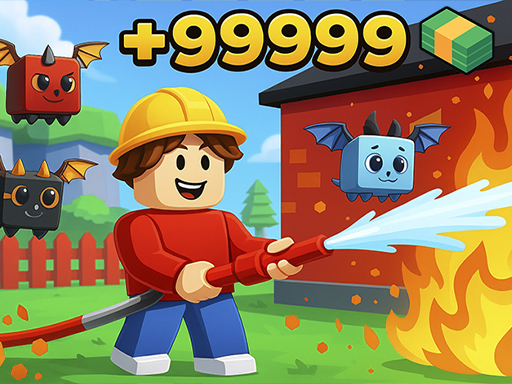
City Rescue Firefighter Challenge works because its constraints do the heavy lifting. Limited water, a running clock, and fires that spread at different rates force players to prioritize rather than react. The route between incidents matters as much as aim, and score sharing gives the stage structure a competitive edge. It suits players who enjoy time management and precise input, though anyone expecting upgrades or combat will find the scope narrower than the tags suggest.
About this game
Aiming Water Under a Countdown
Every stage in City Rescue Firefighter Challenge runs on a timer, and your main action is aiming and releasing water at fire locations using mouse or touch input. Accuracy is not cosmetic: a misplaced stream wastes both water and seconds. Because the clock never stops, each spray is a commitment. The game asks you to line up shots carefully rather than hold down a button and hope.
Reading the Streets Between Fires
Fires are not all in one place. You move through the urban environment to reach each incident, so the route you take between blazes directly affects how much time remains when you arrive. Obstacles in the streets slow that movement, which means the map itself becomes part of the puzzle. A fire that looks close may sit behind a blocked path, and a longer detour can cost you a stage you thought was under control.
Choosing Which Fire Deserves Water
Water supply is limited, so you cannot spray continuously. That constraint forces a decision every stage: which fire to attack first. Fires closest to buildings or spreading fastest usually deserve priority, since letting them grow can cost the whole run. Bonuses may appear during play, offering stronger water power or extra time, and choosing when to grab them is part of the strategy rather than a free upgrade. Grabbing a bonus at the wrong moment can pull you away from a fire that needed attention.
How Difficulty Escalates
Early stages are forgiving, with manageable flames and generous time limits. As you advance, fires spread more quickly and the clock tightens. This progression is the main difficulty curve, and it rewards better aim and faster reactions rather than new abilities. A stage that feels comfortable can become tense within a few attempts, which keeps the challenge tied to player improvement instead of artificial gating.
Who This Suits
The controls are simple enough for a wide audience, and the goals are clear from the first stage. Score sharing lets players compare completion times, adding a friendly competitive layer for those who enjoy optimizing routes and reflexes. Because the theme is rescue and protection rather than combat, the game stays suitable for all ages and leans on coordination and problem-solving.
Compatibility
FAQ
Player Comments
Sign in to comment
You must be logged in before posting a review or rating.
No comments yet. Be the first to comment!





Editorial Notes