

What players say
Tactical Terrain Navigator blends arcade action with light tactical decision-making. Its defining twist is that removing obstacles makes more enemy vehicles appear, forcing players to weigh mobility against threat level. Procedural generation ensures each session feels new, and the gentle learning curve makes it approachable for desktop players. The difficulty scales naturally, offering replay value for both short breaks and extended play. However, the game's long-term depth depends on how much variety the procedural system delivers, which is not fully detailed in the available information.
About this game
Battlefield Generation and Variety
Every time you start a new session in Tactical Terrain Navigator, the battlefield is built from scratch. Obstacles, pathways, and the starting positions of opposing vehicles are rearranged, so no two playthroughs follow the same layout. This procedural approach means you cannot rely on memorized routes; instead, you read the field as it appears and adjust your plan on the fly. The variety keeps each attempt feeling like a fresh puzzle rather than a repeat of the last.
Clearing Obstacles and Managing Threat
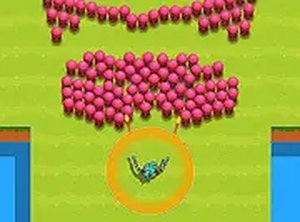
A central mechanic involves removing barriers and debris from the field. Clearing a path gives you more room to move and aim, but it also triggers additional enemy vehicles to appear. This creates a direct tension: the more space you open, the more opponents you invite. Deciding when to clear and when to hold back is the core tactical choice. Rushing to remove everything can quickly overwhelm you, while ignoring obstacles may leave you boxed in.
Controls and Accessibility
Tactical Terrain Navigator is built for desktop play, using keyboard and mouse for movement and aiming. The control scheme is precise enough for fine adjustments, and the learning curve is gentle, so newcomers can pick up the basics without a long tutorial. A full-screen mode is available for a more immersive view, but the standard windowed mode works well for short sessions or when you want to keep the game visible alongside other tasks.
Replay Value and Difficulty Scaling
The combination of random stage generation and an increasing number of opponents gives the game strong replay value. Each session presents a new puzzle to solve, and the difficulty rises naturally as you improve. Because the challenge scales with your performance, the game stays engaging without becoming frustrating. This makes it suitable for both quick breaks and longer play sessions, depending on how long you want to test your decision-making.
✅ Compatibility & Testing
FAQ
Player Comments
Sign in to comment
You must be logged in before posting a review or rating.
No comments yet. Be the first to comment!




Editorial Notes