

What players say
Orbital Frontier Guardian builds its challenge around one strong idea: a platform that never stops rotating. That single mechanic reshapes aiming, positioning, and target priority, and the escalating alien waves keep pressure high without adding control complexity. The lack of checkpoints or saves makes every run a clean test, which will appeal to players who enjoy chasing high scores. Those wanting persistent progression or a slower pace may find the format repetitive, but the design is coherent and the visual and audio clarity support fast decisions.
About this game
Spinning Arena, Shifting Aim
Orbital Frontier Guardian places the player on a circular platform that never stops rotating. Because the surface moves continuously, aiming and positioning become a constant negotiation with the spin. There is no safe corner to camp in; every second demands small adjustments to stay aligned with incoming threats. This rotation turns a familiar survival setup into a test of spatial awareness, where reading the platform's motion matters as much as tracking enemies.
Alien Waves and Target Priority
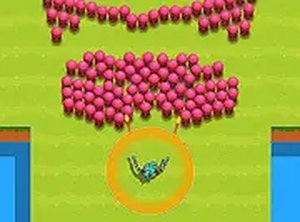
Alien creatures close in from all sides, so threats rarely arrive from a single direction. Early waves introduce basic opponents, while later groups mix in faster and more erratic attackers. As density increases, players must decide when to commit to offense and when to evade. No two sessions play out identically because enemy variety and timing shift the pressure constantly. Prioritizing the right target often matters more than raw reflexes.
Controls and Focus
Inputs stay deliberately simple: keyboard and mouse handle movement and aiming, with movement tied to the platform's center and the cursor directing shots. A full-screen option reduces visual distractions. The low control complexity lets players concentrate on the rotating battlefield rather than memorizing button combinations, which keeps the challenge rooted in positioning and timing.
Difficulty, Scores, and Replay
Each run starts manageable and escalates as waves progress, with more aggressive enemy patterns appearing over time. There are no checkpoints or saves, so every attempt is a fresh test. That structure encourages repeated play: improvement comes from reading the battlefield faster and reacting sooner. Success is measured by surviving longer and posting higher scores, giving each run a clear, self-contained goal.
Visual and Audio Clarity
The visual style favors clarity over clutter. Enemy projectiles and platform edges are easy to distinguish, which matters when split-second decisions depend on spotting a threat. Audio cues reinforce incoming danger, letting players react without relying solely on sight. Graphics and sound work together to support the pace rather than decorate it.
Compatibility
FAQ
Player Comments
Sign in to comment
You must be logged in before posting a review or rating.
No comments yet. Be the first to comment!





Editorial Notes