
What players say
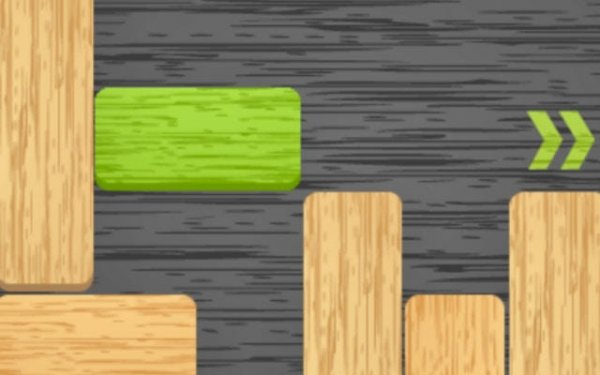
Woblox Logic Puzzle distinguishes itself by requiring two connected actions per level: rearranging blocks to form a corridor and then guiding a green block along printed arrows to an exit gap. The absence of timers shifts the experience toward deliberate logic rather than arcade reflexes. Difficulty rises gradually as boards become denser and move sequences lengthen. The reverse-last-move and restart options make experimentation low-risk, which suits casual players while still offering depth for those who enjoy planning several steps ahead. The main limitation is that the core loop remains a single mechanic, so players seeking variety or narrative may find it narrow.
About this game
A Reverse Sliding Puzzle
Most sliding block puzzles hand you a crowded board and one goal: free a specific piece. Woblox Logic Puzzle flips that structure. You first rearrange blocks to build a clear corridor, then steer a green block along directional arrows printed on the board until it reaches an exit gap. The two-step objective—clear the path, then follow the arrows—gives every level a readable structure without adding timers or score pressure.
How a Level Unfolds
Each board holds several blocks of different shapes and sizes plus the green block. You click and drag blocks horizontally or vertically, but a block only moves if nothing blocks its path. Early levels leave plenty of open space, so progress feels quick. Later boards tighten the layout, and a single misplaced block can seal off the route you were building. Because there is no time limit, you can pause, study the grid, and test a move before committing to it.
Reading Arrows Before You Move
The green block must follow the arrows printed on the board, so those arrows tell you which direction it will travel once the corridor is open. Your job is not just to free the green block—you also need to clear every tile along its arrow path. Experienced solvers often work backwards from the exit gap, identifying which blocks sit in the green block's way and which ones can be parked out of the corridor. Clearing space around the green block first is a reliable opening habit.
Difficulty, Pace, and Recovery
Complexity rises as you progress. Boards get denser, and the number of moves required to open a path grows. There are no hidden purchases and no timers, so the only pressure comes from the puzzle itself. If a sequence goes wrong, you can reverse your last move or restart the level and try a different order. That restart option keeps the game approachable for casual players while still offering deeper logical challenges for anyone who enjoys planning several steps ahead.
Compatibility
FAQ
Player Comments
Sign in to comment
You must be logged in before posting a review or rating.
No comments yet. Be the first to comment!


Editorial Notes